Architecture · 2024
Manifestation of The Hybridized
by Xiao Yang
Manifestation of The Hybridized investigates how architecture can respond to the layered social, commercial, and infrastructural conditions of Jakarta.
Situated in Pasar Senen, the project uses mapping, sectional analysis, and spatial experimentation to reinterpret the relationship between market spaces, public movement, and collective urban identity. Its hybrid structure proposes a new architectural framework where economic activity, civic gathering, and urban memory coexist within one adaptive spatial system.
Through rigorous urban research and design iteration, the project demonstrates how architecture can serve as a mediator between diverse urban forces—creating spaces that are simultaneously infrastructural, commercial, and civic in character.
Project Details
Artist
Xiao Yang
Year
2024
Medium
Architectural Design, Urban Research, Mapping, Sectional Analysis
Dimensions
Urban scale intervention
Location
Pasar Senen, Jakarta, Indonesia
Artist Statement
Xiao Yang is an architectural designer whose work engages with complex urban conditions through research-driven design methodologies. His practice investigates how architecture can mediate between economic forces, social patterns, and spatial experience—particularly in contexts where formal and informal urbanism intersect. Through mapping, drawing, and speculative design, he explores architectural strategies that are responsive to local conditions while proposing new spatial frameworks for collective urban life.
— Xiao Yang
Interested in This Work?
For inquiries or more information, please contact:
info.unbriefed@gmail.com
Works
Project Introduction & Perspective
01 / 05
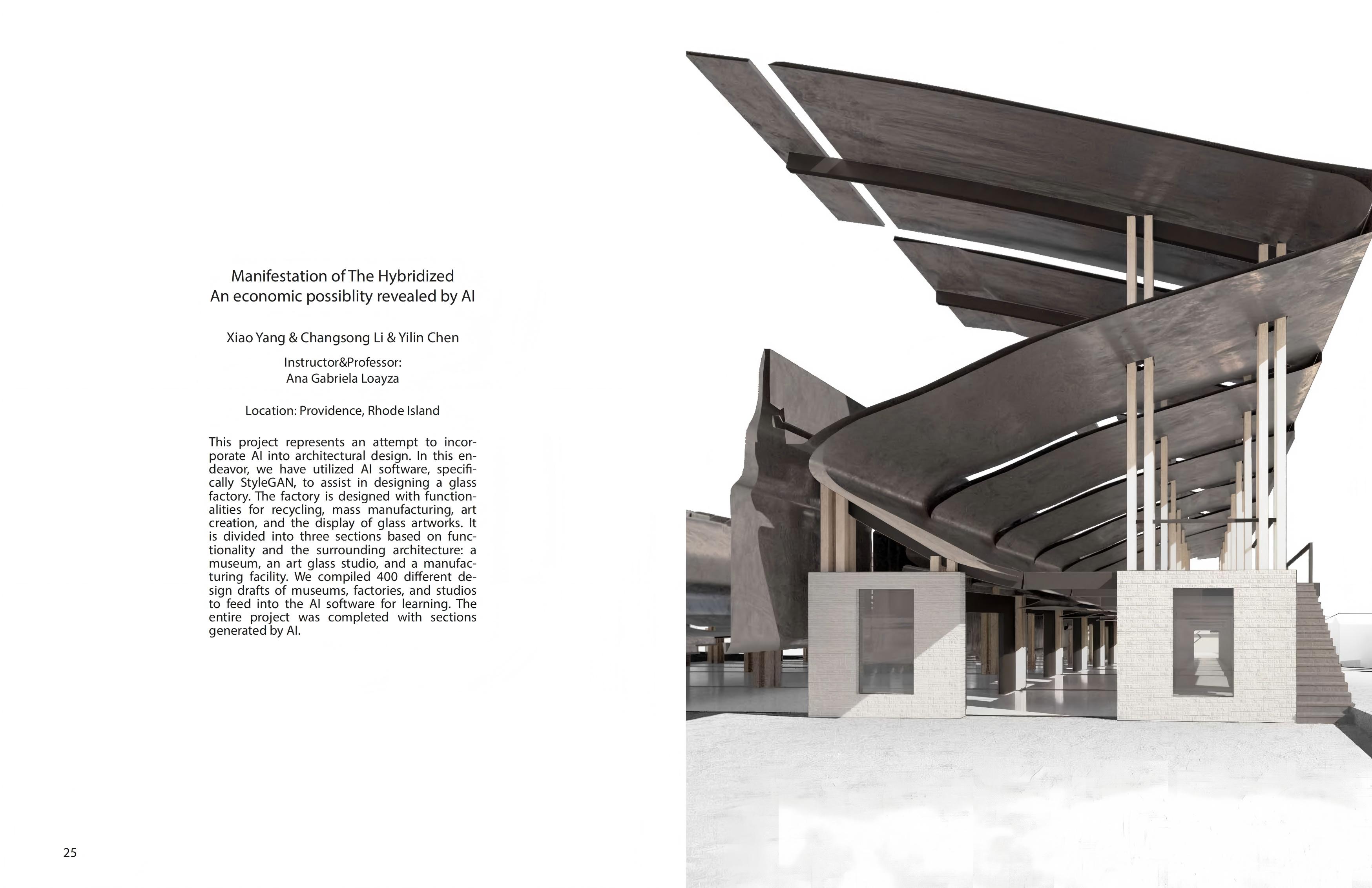
Opening spread introducing the project concept with an interior perspective view. The rendered image shows the hybrid structural system that integrates market activity with public circulation. The accompanying text establishes the project's conceptual framework and its engagement with Jakarta's urban complexity.
Site Analysis & Urban Context
02 / 05
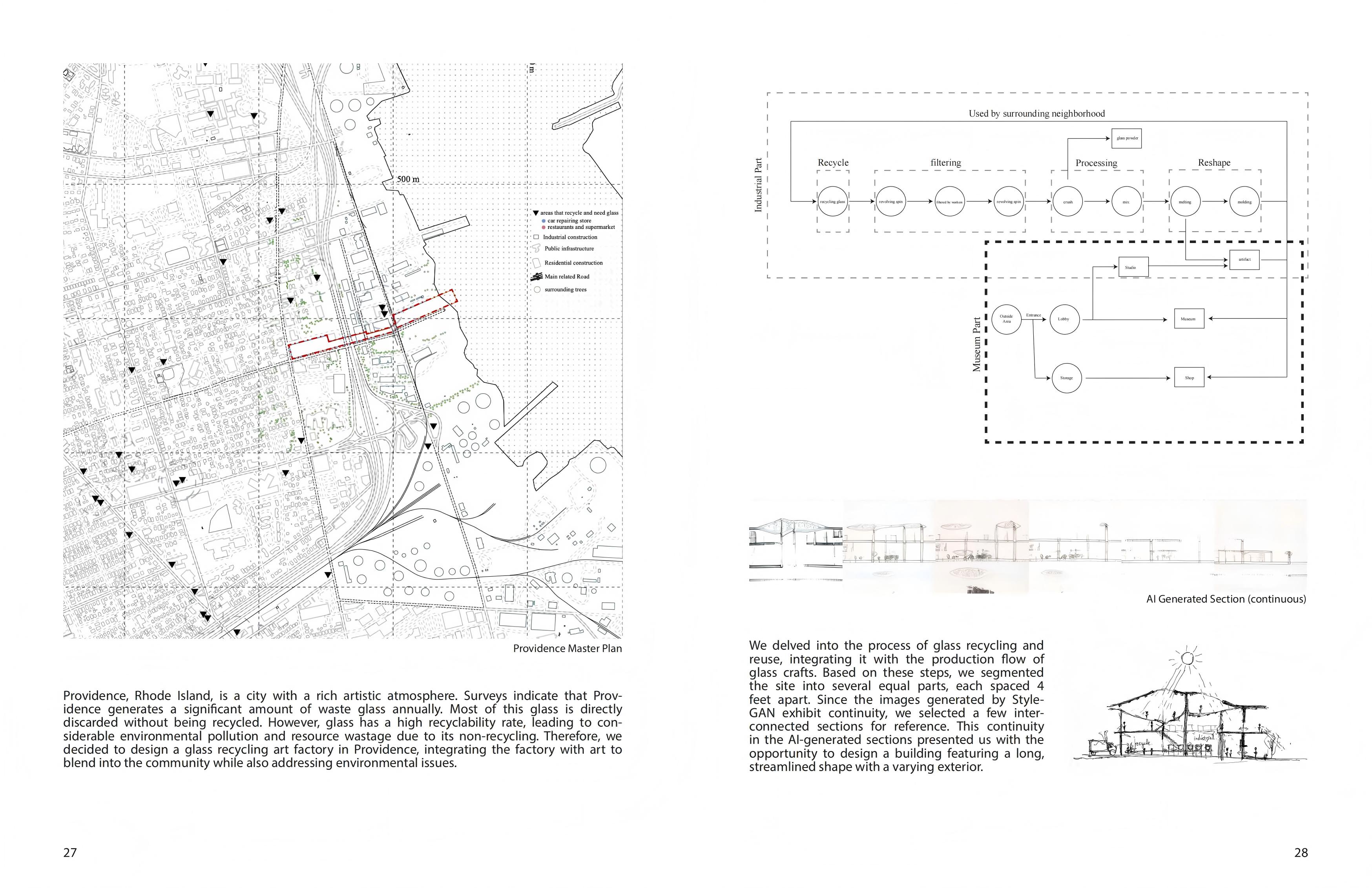
Urban mapping and site analysis documenting Pasar Senen's position within Jakarta's broader infrastructural network. The drawings investigate pedestrian flows, commercial patterns, and existing building typologies. Diagrams reveal the site's role as a node connecting multiple urban systems.
Axonometric Diagram & Spatial Organization
03 / 05
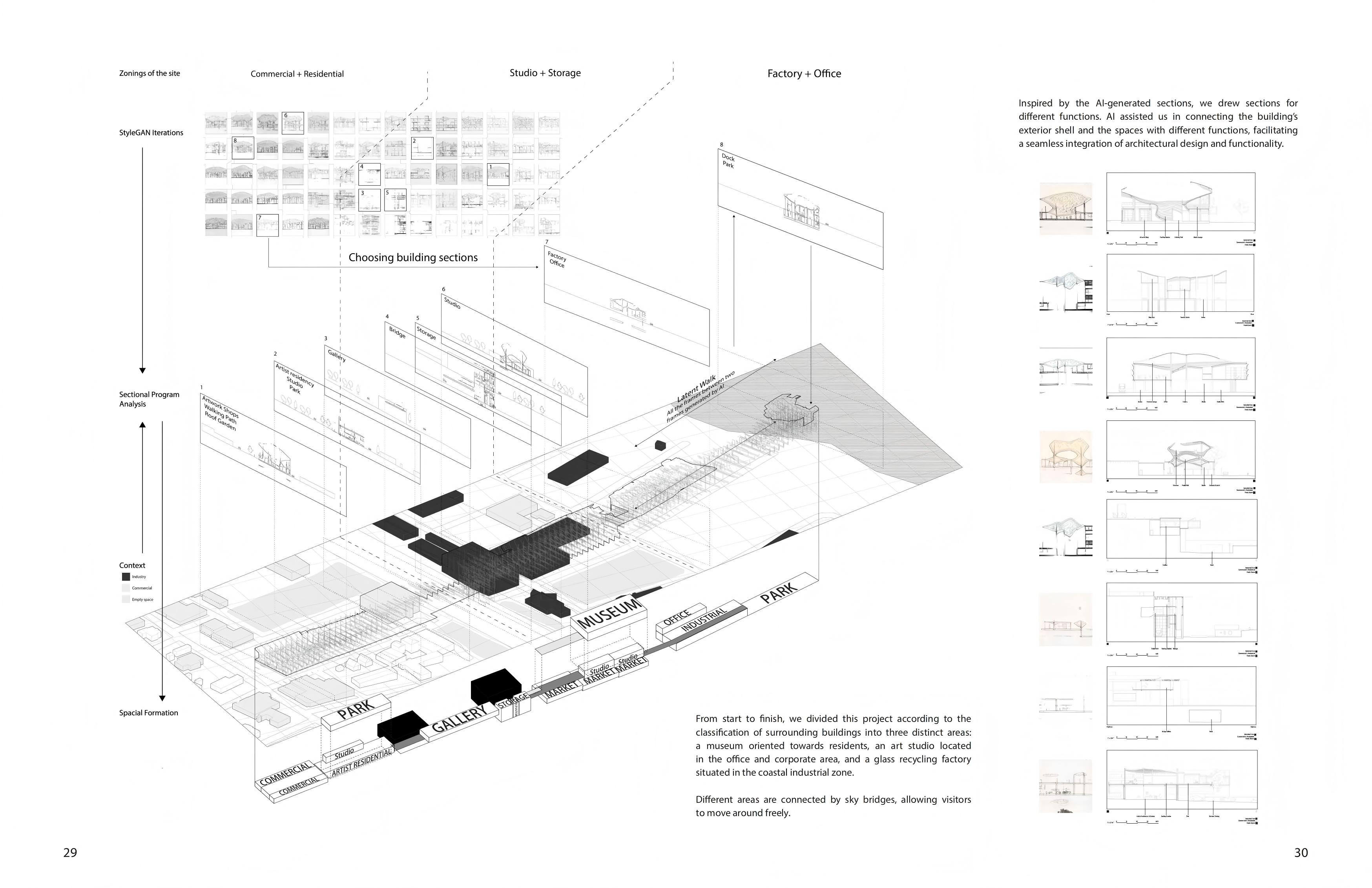
Exploded axonometric drawing revealing the project's layered spatial organization. The diagram demonstrates how market stalls, public platforms, and circulation routes are integrated within a coherent structural framework. Detail drawings on the right show specific spatial conditions and material assemblies.
Section & Interior Perspectives
04 / 05
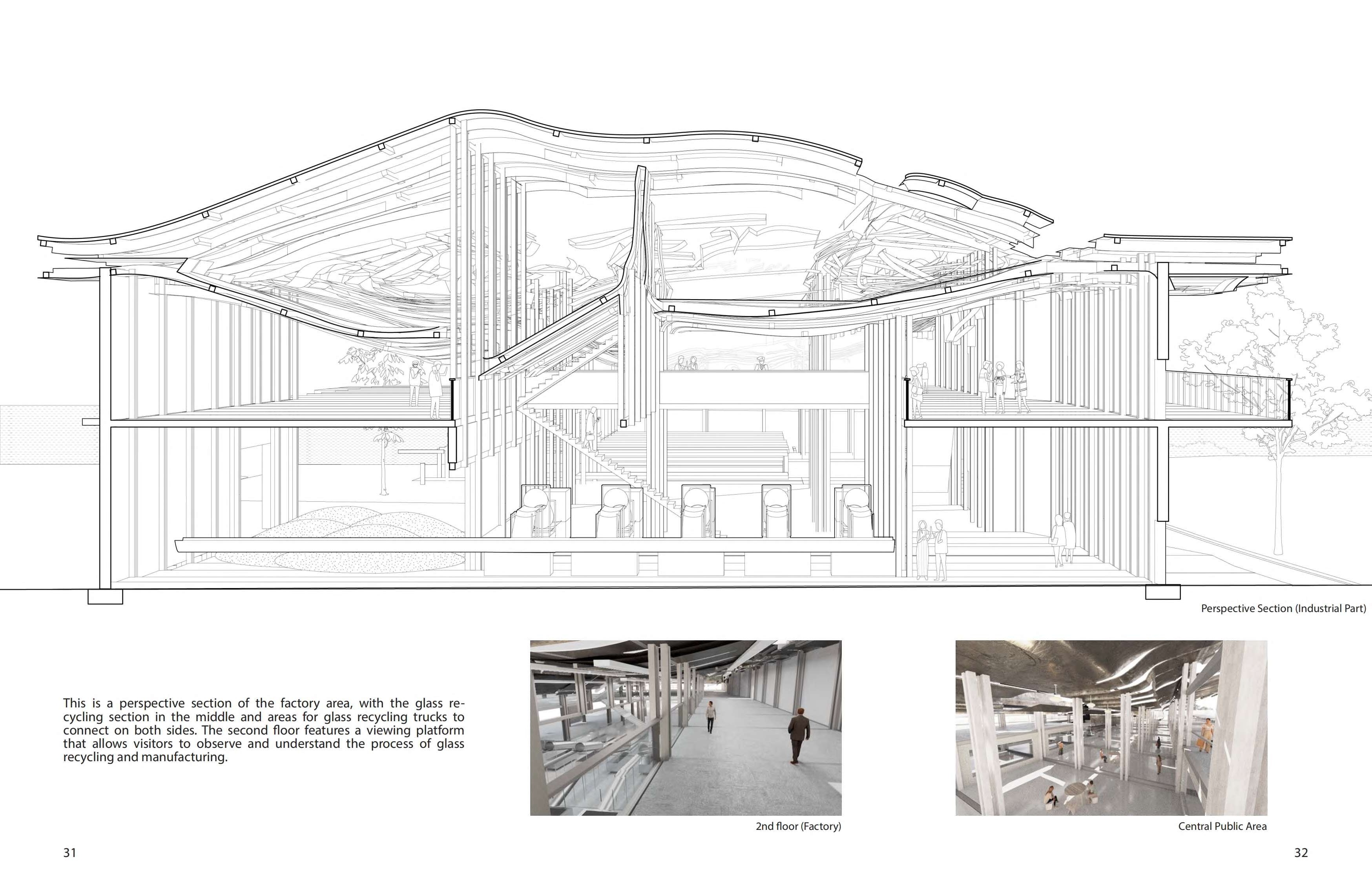
Long section cutting through the hybrid structure, revealing the vertical and horizontal relationships between different programmatic zones. Interior perspectives below show the spatial qualities at human scale—demonstrating how the architectural system creates diverse atmospheres for commercial, civic, and transitional activities.
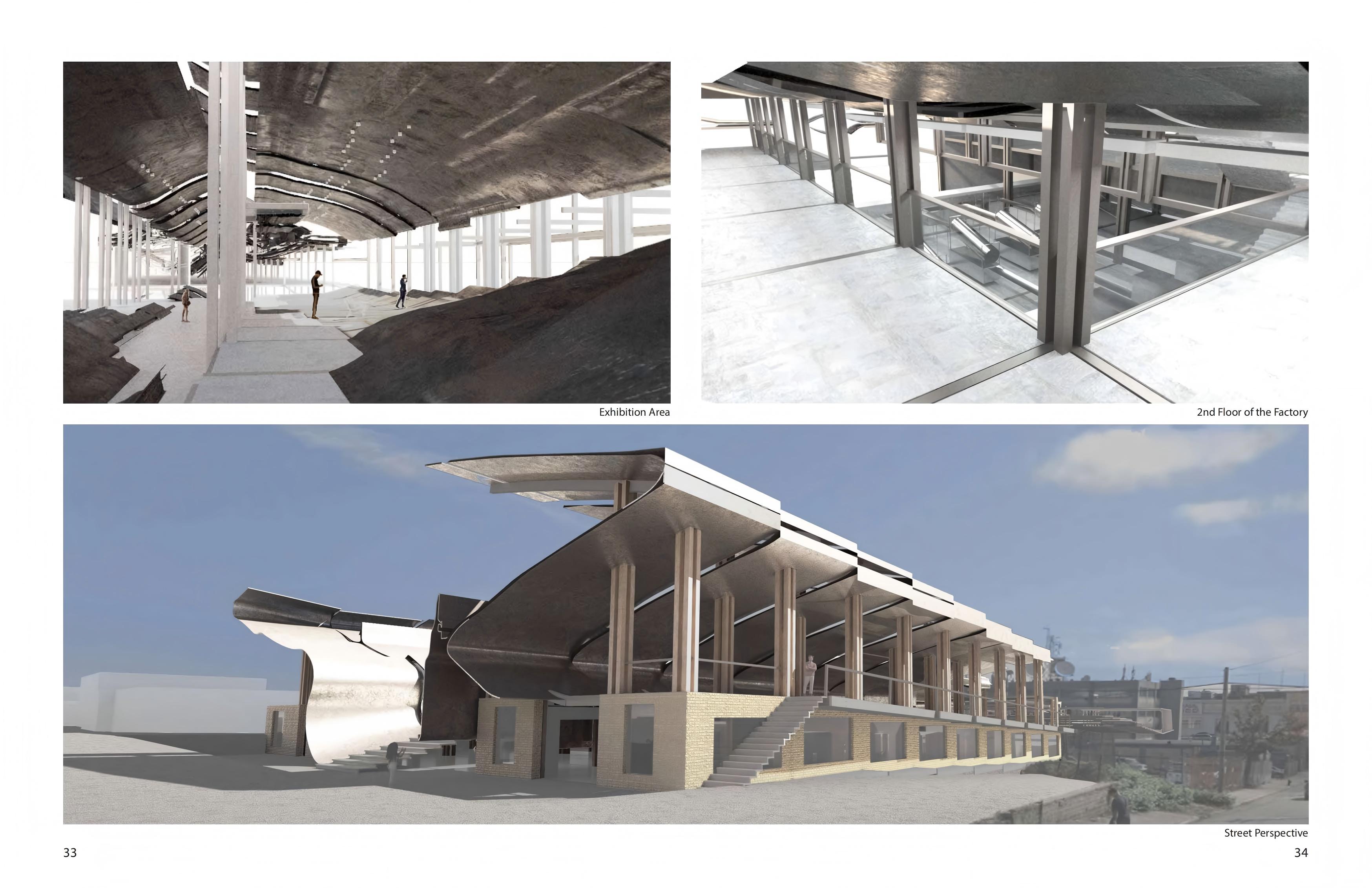
Interior Views & Exterior Context
05 / 05
Rendered views documenting the project from multiple vantage points. Interior images reveal the material character and spatial openness of the market hall. The exterior view positions the intervention within Jakarta's urban fabric, showing how the new structure engages with surrounding buildings and infrastructure.
Architecture · 2024
Manifestation of The Hybridized
by Xiao Yang
Manifestation of The Hybridized investigates how architecture can respond to the layered social, commercial, and infrastructural conditions of Jakarta.
Situated in Pasar Senen, the project uses mapping, sectional analysis, and spatial experimentation to reinterpret the relationship between market spaces, public movement, and collective urban identity. Its hybrid structure proposes a new architectural framework where economic activity, civic gathering, and urban memory coexist within one adaptive spatial system.
Through rigorous urban research and design iteration, the project demonstrates how architecture can serve as a mediator between diverse urban forces—creating spaces that are simultaneously infrastructural, commercial, and civic in character.
Project Details
Artist
Xiao Yang
Year
2024
Medium
Architectural Design, Urban Research, Mapping, Sectional Analysis
Dimensions
Urban scale intervention
Location
Pasar Senen, Jakarta, Indonesia
Artist Statement
Xiao Yang is an architectural designer whose work engages with complex urban conditions through research-driven design methodologies. His practice investigates how architecture can mediate between economic forces, social patterns, and spatial experience—particularly in contexts where formal and informal urbanism intersect. Through mapping, drawing, and speculative design, he explores architectural strategies that are responsive to local conditions while proposing new spatial frameworks for collective urban life.
— Xiao Yang
Interested in This Work?
For inquiries or more information, please contact:
info.unbriefed@gmail.com
Works
Project Introduction & Perspective
01 / 05
Opening spread introducing the project concept with an interior perspective view. The rendered image shows the hybrid structural system that integrates market activity with public circulation. The accompanying text establishes the project's conceptual framework and its engagement with Jakarta's urban complexity.
Site Analysis & Urban Context
02 / 05
Urban mapping and site analysis documenting Pasar Senen's position within Jakarta's broader infrastructural network. The drawings investigate pedestrian flows, commercial patterns, and existing building typologies. Diagrams reveal the site's role as a node connecting multiple urban systems.
Axonometric Diagram & Spatial Organization
03 / 05
Exploded axonometric drawing revealing the project's layered spatial organization. The diagram demonstrates how market stalls, public platforms, and circulation routes are integrated within a coherent structural framework. Detail drawings on the right show specific spatial conditions and material assemblies.
Section & Interior Perspectives
04 / 05
Long section cutting through the hybrid structure, revealing the vertical and horizontal relationships between different programmatic zones. Interior perspectives below show the spatial qualities at human scale—demonstrating how the architectural system creates diverse atmospheres for commercial, civic, and transitional activities.
Interior Views & Exterior Context
05 / 05
Rendered views documenting the project from multiple vantage points. Interior images reveal the material character and spatial openness of the market hall. The exterior view positions the intervention within Jakarta's urban fabric, showing how the new structure engages with surrounding buildings and infrastructure.
Architecture · 2024
Manifestation of The Hybridized
by Xiao Yang
Manifestation of The Hybridized investigates how architecture can respond to the layered social, commercial, and infrastructural conditions of Jakarta.
Situated in Pasar Senen, the project uses mapping, sectional analysis, and spatial experimentation to reinterpret the relationship between market spaces, public movement, and collective urban identity. Its hybrid structure proposes a new architectural framework where economic activity, civic gathering, and urban memory coexist within one adaptive spatial system.
Through rigorous urban research and design iteration, the project demonstrates how architecture can serve as a mediator between diverse urban forces—creating spaces that are simultaneously infrastructural, commercial, and civic in character.
Project Details
Artist
Xiao Yang
Year
2024
Medium
Architectural Design, Urban Research, Mapping, Sectional Analysis
Dimensions
Urban scale intervention
Location
Pasar Senen, Jakarta, Indonesia
Artist Statement
Xiao Yang is an architectural designer whose work engages with complex urban conditions through research-driven design methodologies. His practice investigates how architecture can mediate between economic forces, social patterns, and spatial experience—particularly in contexts where formal and informal urbanism intersect. Through mapping, drawing, and speculative design, he explores architectural strategies that are responsive to local conditions while proposing new spatial frameworks for collective urban life.
— Xiao Yang
Interested in This Work?
For inquiries or more information, please contact:
info.unbriefed@gmail.com
Works
Project Introduction & Perspective
01 / 05
Opening spread introducing the project concept with an interior perspective view. The rendered image shows the hybrid structural system that integrates market activity with public circulation. The accompanying text establishes the project's conceptual framework and its engagement with Jakarta's urban complexity.
Site Analysis & Urban Context
02 / 05
Urban mapping and site analysis documenting Pasar Senen's position within Jakarta's broader infrastructural network. The drawings investigate pedestrian flows, commercial patterns, and existing building typologies. Diagrams reveal the site's role as a node connecting multiple urban systems.
Axonometric Diagram & Spatial Organization
03 / 05
Exploded axonometric drawing revealing the project's layered spatial organization. The diagram demonstrates how market stalls, public platforms, and circulation routes are integrated within a coherent structural framework. Detail drawings on the right show specific spatial conditions and material assemblies.
Section & Interior Perspectives
04 / 05
Long section cutting through the hybrid structure, revealing the vertical and horizontal relationships between different programmatic zones. Interior perspectives below show the spatial qualities at human scale—demonstrating how the architectural system creates diverse atmospheres for commercial, civic, and transitional activities.
Interior Views & Exterior Context
05 / 05
Rendered views documenting the project from multiple vantage points. Interior images reveal the material character and spatial openness of the market hall. The exterior view positions the intervention within Jakarta's urban fabric, showing how the new structure engages with surrounding buildings and infrastructure.